
Theatrical Passage Across France
Henry VThis thread traces how the Chorus asks the audience to imagine the spaces and times the stage cannot literally show.
increasing Bearing strength in each event
 decreasing
Bearing strength in each eventdecreasingA Limited Stage
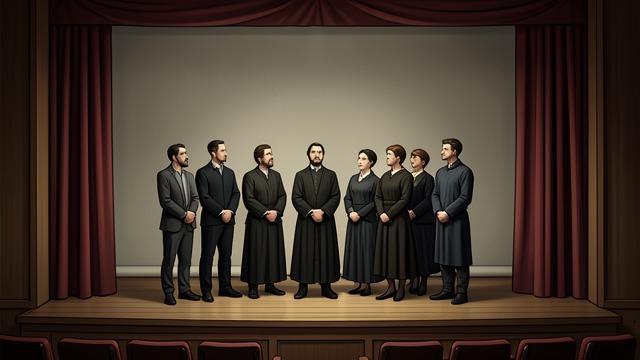
A Limited Stage
The wooden O
Chorus admits that a small stage cannot contain armies, kingdoms, and distant landscapes. The play makes its limits explicit rather than disguising them.
Audience as collaborator
The spectators are asked to supply the scale that scenery cannot provide. Imagination becomes a necessary part of the action.
The Fleet Imagined
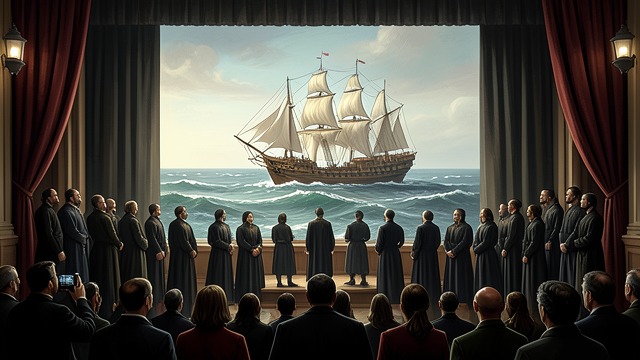
The Fleet Imagined
A voyage made in thought
Chorus asks the audience to picture ships leaving Hampton and crossing the sea. The fleet is created through verbal direction rather than a literal maritime spectacle.
A shared crossing
Spectators are invited to follow the English army’s imagined passage. The device joins audience attention to the campaign’s movement.
Siege by Suggestion
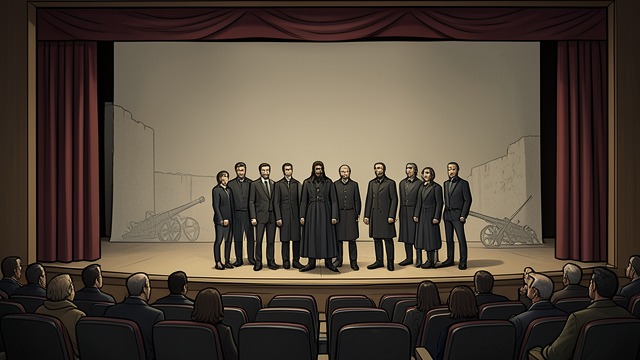
Siege by Suggestion
The unseen assault
Chorus describes artillery and the walls of Harfleur, then leaves the attack to the audience’s mind. The transition compresses a large military operation into theatrical signs.
Imagination completes action
The stage presents only fragments, while spectators infer the scale and danger. The play makes absence part of its representational method.
Night Before Battle
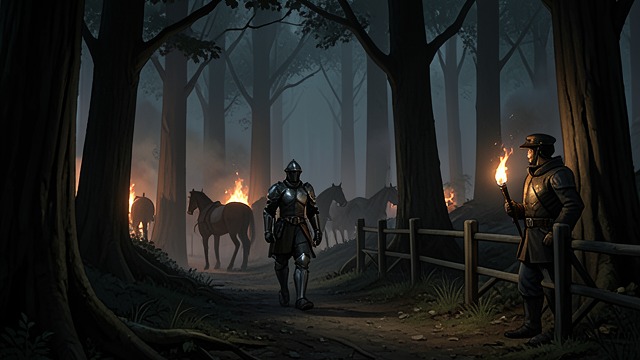
Night Before Battle
Two camps in darkness
Chorus evokes sentries, fires, horses, and armorers preparing through the night. These details establish tension before the battle itself is shown.
The king among soldiers
The imagined night culminates in King Henry V visiting his troops. A brief human presence becomes the bridge from description to action.
The Return to France
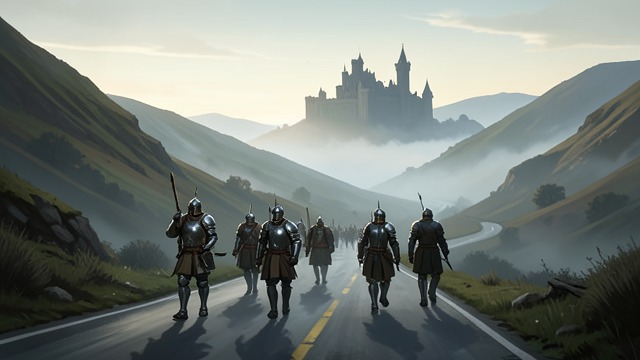
The Return to France
Time compressed
Chorus skips the return to England and later diplomatic developments, bringing the action back to France. The story acknowledges that its history exceeds the stage’s available time.
An ending with an aftermath
The Epilogue recalls that the settlement will not endure through Henry’s heirs. The theatrical frame both celebrates a moment and points beyond it.
At the opening of the play
At the start of the French expedition
During the opening of the Harfleur siege
On the eve of Agincourt
Near the end, as the peace negotiations begin
